
Turning Shopping Into Loyalty


An interview with Geno Prussakov by Sean Murphy
Banks have made their money from lending for as long as banking has been a business. Deposits come in, loans go out, and the gap between the two minus operational costs is the profit. Fees, cards and current accounts all matter, but break a traditional bank down far enough and the majority of the income still comes from lending. There is no particular guarantee that the banks of the future will work that way. Stripe and the larger payment companies have built themselves on a small cut of every transaction that passes through them, and that logic, monetising the flow rather than the balance sheet, is likely to bleed into banking as a serious source of income rather than a line item at the edge of the accounts. For Geno Prussakov, CEO and co-founder of Loyalize, this is an opportunity.
The mismatch Prussakov noticed sits in the economics of cashback. A bank paying rewards out of card interchange is more or less capped in the low single digits, because that is all the underlying fee will bear. In affiliate marketing, the commissions can be far higher, sometimes strong double figures, and at times even equal to the whole of an initial payment. He arrives at fintech from an unusual direction, spending close to thirty years in affiliate marketing, since 1999, first running an affiliate programme for his own online business, then building a marketing agency, writing books, running workshops, and lecturing on the subject at Boston University's Questrom School of Business. He resists the idea that he switched fields. "More of a bridge" is how he puts it.
Loyalize is built to carry those richer economics into banking apps and loyalty programmes. The company holds direct relationships with more than nine thousand merchants who pay a commission every time a sale comes through one of its links.
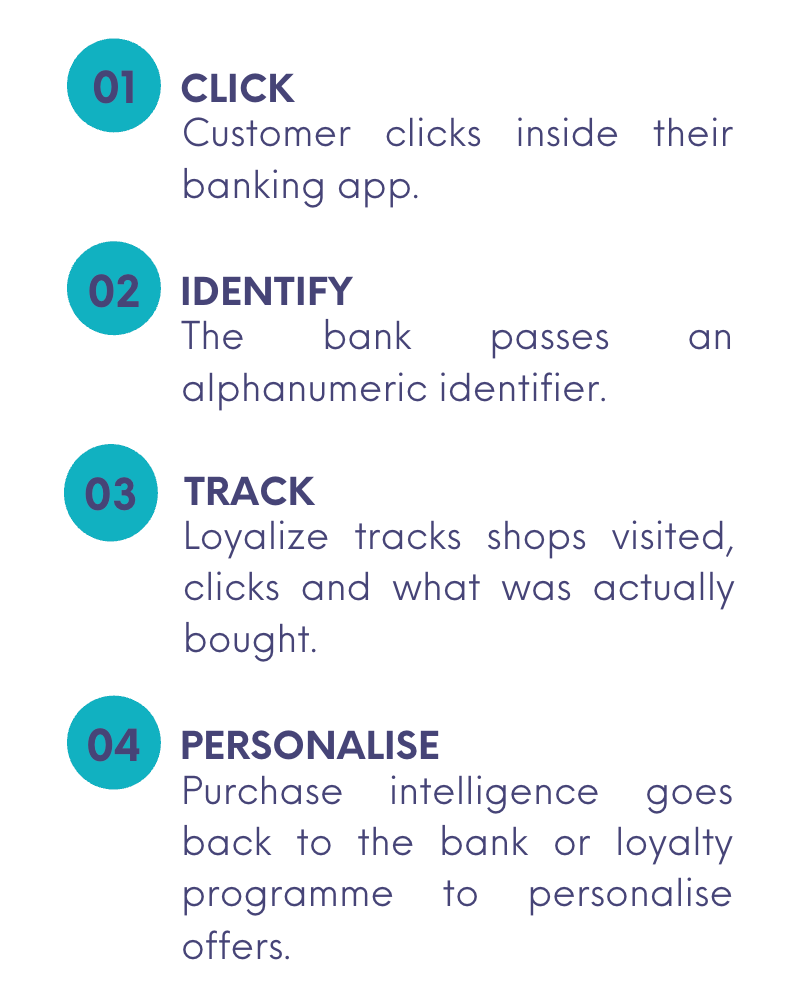
A customer clicks inside their banking app, shops, and pays with that bank's card; the merchant reports the transaction, Loyalize supports the matching, and the bulk of the commission is passed to the financial institution, which can then offer a materially better rate than interchange alone would allow. It does not have to be a choice between the two, and there are instant discounts in the cart as well for shoppers who prefer their gratification immediate. Prussakov sums the arrangement up as a way to turn a customer's shopping elsewhere into loyalty to the company they already bank with.
The engine underneath is data, and Prussakov is careful about how he handles it. The system is deliberately built to need no personally identifiable information; a bank passes an alphanumeric identifier on the click, and Loyalize tracks the rest, the shops visited, the clicks, and, from the majority of its merchant partners, the SKU-level detail of what was actually bought rather than merely added to a basket.
Loyalize never learns who the shopper is, only the bank or loyalty programme using the service can map the identifier back to a real customer, but Loyalize can see the purchases and hand that intelligence back to them. The point, he argues, is to let the bank or programme personalise its offers properly.
Loyalty itself has lost value for many of the companies that once prized it. The airlines and hotels that built the points economy have not been giving it the same attention as before. The brands that pay affiliate commissions, by contrast, are willing to pay real money for a sale and a returning shopper. Loyalize's wager is that a bank sitting between the two can hand the customer a reward worth having and take a decent share of the commission while doing it. If the income of a bank does shift over the next decade from what its customers borrow to what they spend, the institutions that learn to earn from the latter will have a considerable head start.


